

Blog
AI Website Builders vs Dashboard-Based Website Platforms: What’s the Difference Today?
Mar
Creating a website today is easier—and more diverse—than ever before. Whether you’re launching a personal blog, an online store, or a business site, you’ll likely come across two main approaches:
- AI-powered website builders
- Dashboard-based (traditional) website platforms
Each offers a very different experience, and choosing the right one can make a huge difference in how you build, manage, and grow your website. Let’s break them down.
1. AI Website Builders: Fast, Automated, and Beginner-Friendly
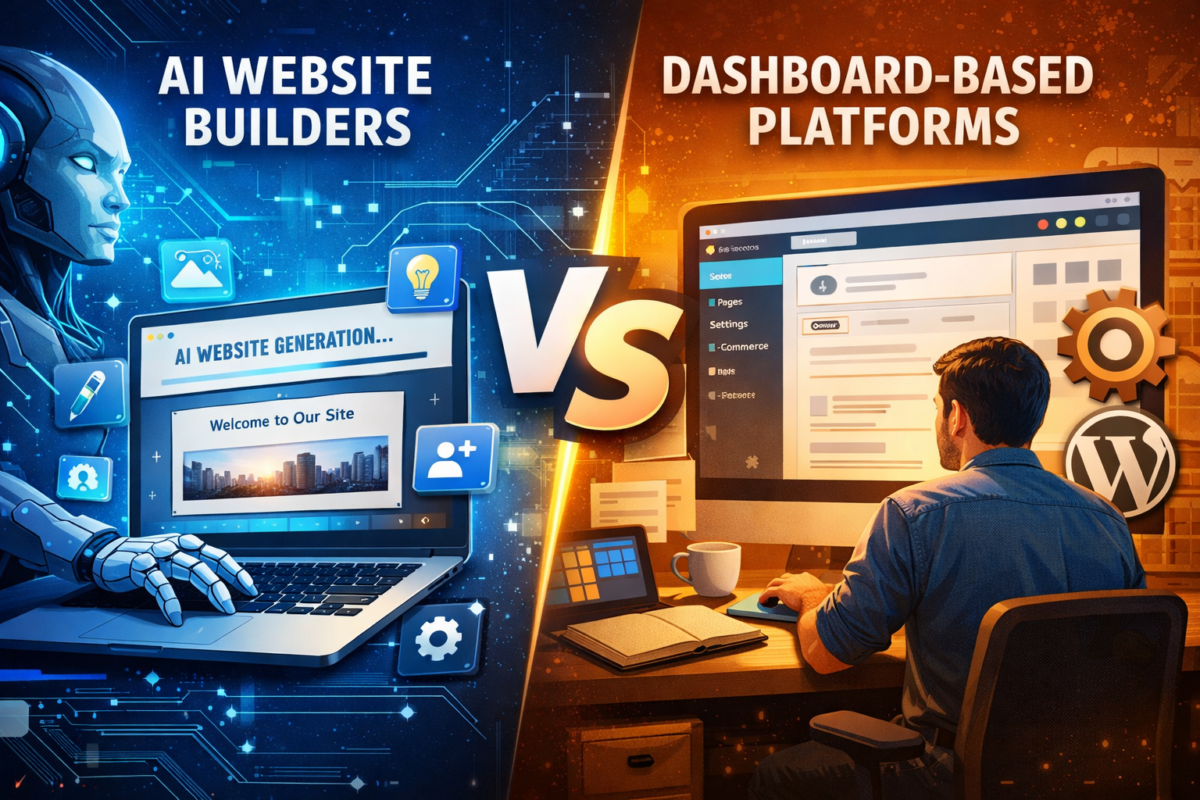
AI website builders are the newest trend in web creation. These tools use artificial intelligence to generate a complete website based on a few inputs—like your business type, preferences, and goals.
How It Works
You answer a few questions, and the AI:
- Designs your layout
- Writes content
- Selects images
- Structures your pages
In minutes, you get a ready-to-use website.
Pros
- Speed: Launch a site in minutes
- Ease of Use: No technical skills required
- Automation: Content and design handled for you
- Great for beginners or quick projects
Cons
- Limited customization: Harder to fine-tune details
- Generic designs: AI-generated layouts can feel similar
- Less control: You rely on AI decisions
Best For
- Small businesses
- Personal portfolios
- Users who want a quick online presence
2. Dashboard-Based Website Platforms: Control and Flexibility
Dashboard-based platforms are the more traditional way of building websites. Think of systems where you log into a backend dashboard to manage your site.
How It Works
You manually:
- Choose or design templates
- Add pages and content
- Install plugins or features
- Manage settings through a control panel
Examples include content management systems (CMS) and website builders with admin dashboards.
Pros
- Full control: Customize every detail
- Scalability: Add features as your site grows
- Professional flexibility: Ideal for complex sites
- Better long-term management
Cons
- Learning curve: Takes time to understand
- Slower setup: More manual work
- Maintenance required: Updates, plugins, etc.
Best For
- Businesses planning long-term growth
- E-commerce websites
- Developers and designers
- Users who want full customization
Key Differences at a Glance
| Feature | AI Website Builders | Dashboard-Based Platforms |
|---|---|---|
| Setup Time | Very fast | Moderate to slow |
| Ease of Use | Very easy | Beginner to advanced |
| Customization | Limited | Extensive |
| Control | Low to moderate | High |
| Scalability | Moderate | High |
| Maintenance | Minimal | Ongoing |
Which One Should You Choose?
The choice depends on your goals:
- Go with AI builders if you want something quick, simple, and hassle-free.
- Choose dashboard platforms if you need flexibility, control, and room to grow.
Final Thoughts
The rise of AI has made website creation more accessible than ever, but it hasn’t replaced traditional platforms. Instead, both options serve different needs.
If you’re just starting out, AI can get you online fast. But if you’re building something bigger or more customized, a dashboard-based platform is still the better choice.
In the end, the best tool is the one that fits your workflow, skill level, and long-term vision.
